How to Choose a Reliable Rhinestone Manufacturer for Your Brand
- Share
- Issue Time
- Sep 3,2026
Summary
Choosing a reliable rhinestone manufacturer requires evaluating product range, manufacturing capability, quality control, sampling, materials, finishes, MOQ, lead time and export support. Confirm custom shapes, branded packaging, compliance documents and repeat-order support. Reviewing samples and specifications before production helps jewelry, fashion and private-label brands reduce risks and build stable partnerships.
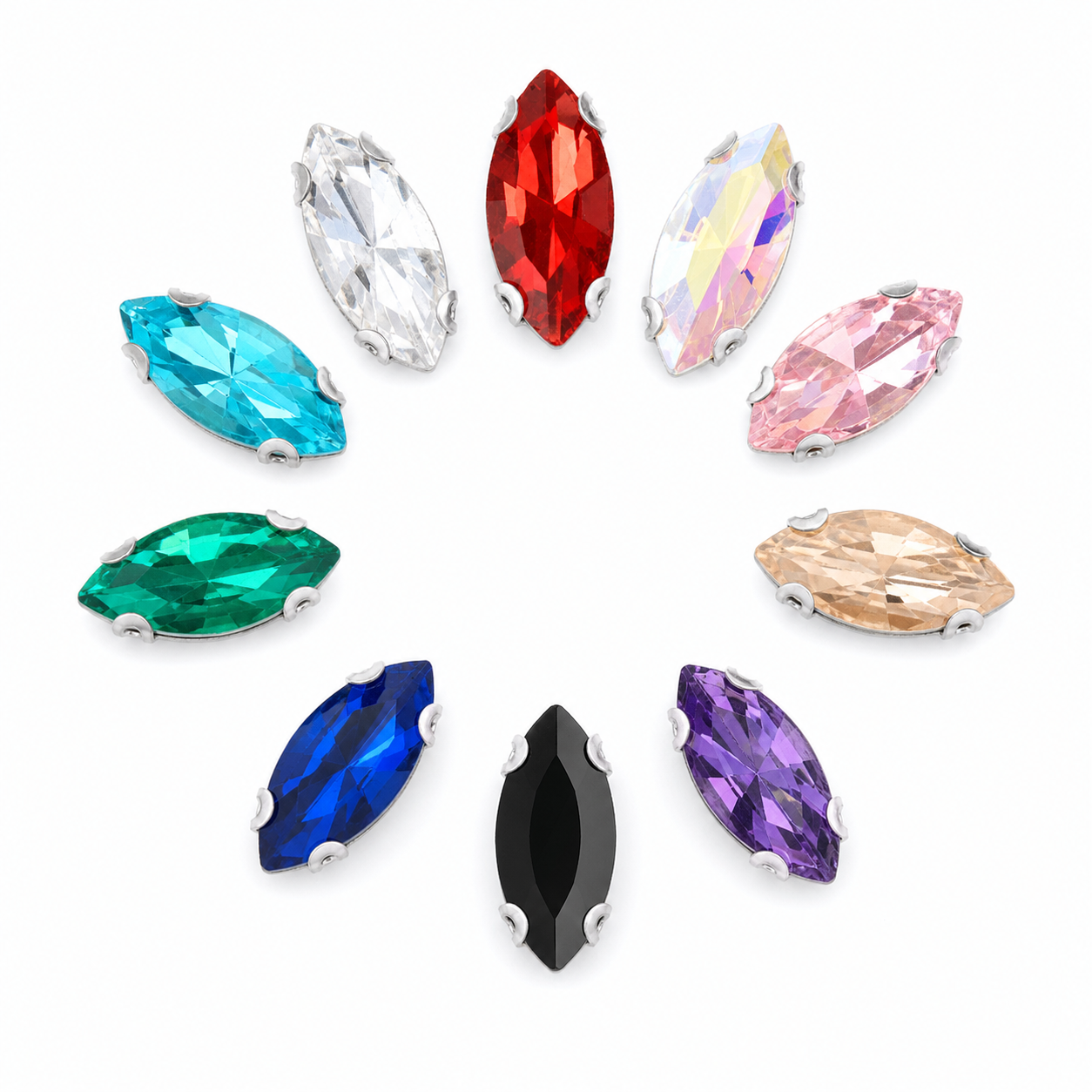
How to Choose a Reliable Rhinestone Manufacturer for Your Brand
A practical guide to evaluating rhinestone factories, product quality, customization, samples, MOQ, lead time, compliance and long-term wholesale supply.
Choosing a rhinestone manufacturer is a strategic sourcing decision, not simply a search for the lowest unit price. For jewelry brands, private-label businesses and fashion accessory companies, the right manufacturing partner must provide more than attractive stones. You also need consistent product quality, clear sampling procedures, flexible customization, reliable communication and a supply system that can support both initial testing and repeat orders.
The evaluation process becomes especially important when your product range includes claw rhinestones, glass rhinestones, flatback stones, sew-on components, pearls, cubic zirconia or other jewelry accessory components. Different applications may require different materials, shapes, sizes, colors, finishes and attachment methods.
This guide explains what B2B buyers should review before choosing a rhinestone factory and how to move from supplier discovery to sample approval and production planning. For an overview of available product categories, visit G&J’s wholesale rhinestone collection .
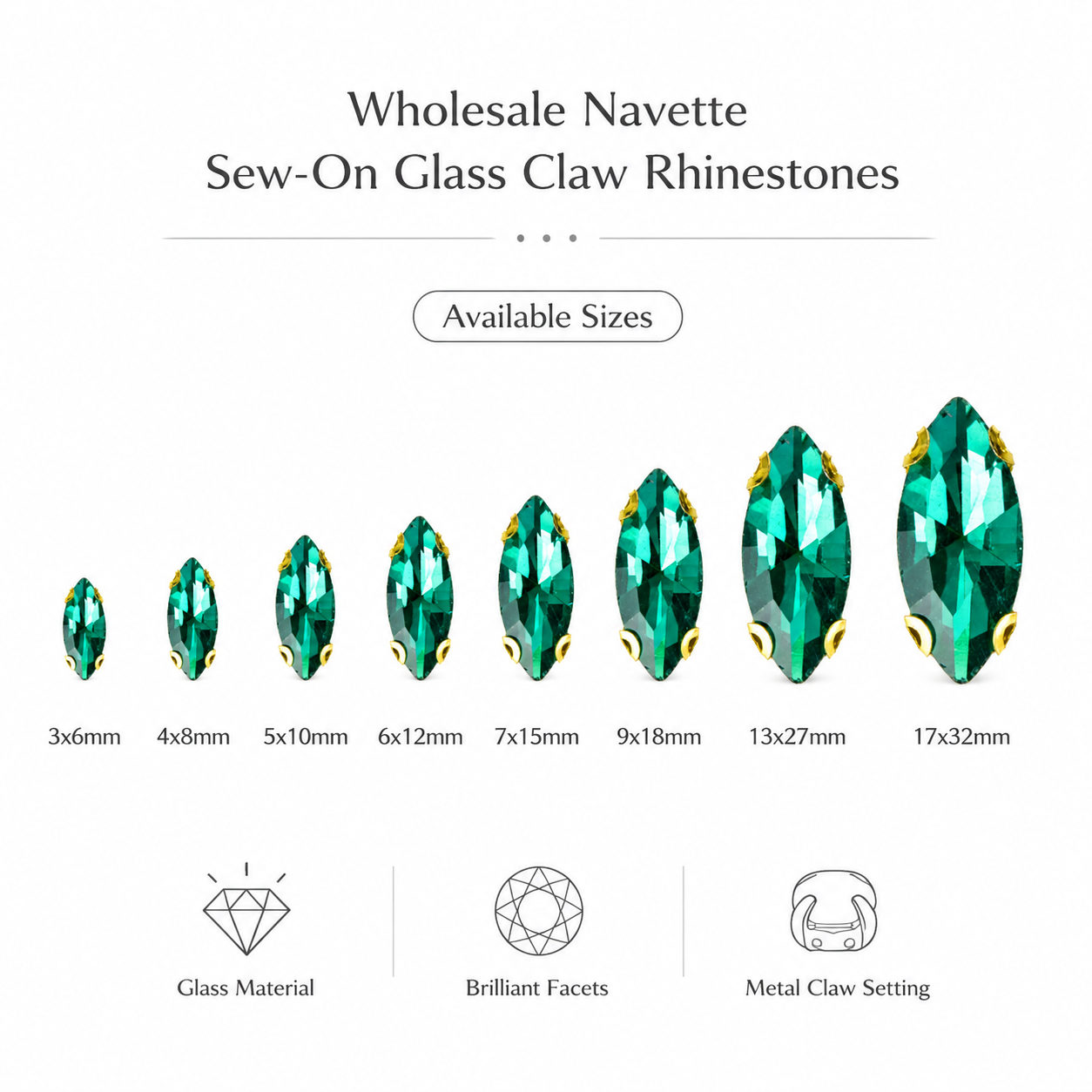
What to Check Before Choosing a Rhinestone Manufacturer
Product Scope and Application Knowledge
Start by checking whether the manufacturer’s product range matches your current project and future product plans. A suitable partner should understand the difference between product formats and their intended applications, rather than offering one generic stone for every use case.
For example, a jewelry brand may need prong or claw-set rhinestones for dimensional designs, while a garment manufacturer may require sew-on or hotfix glass stones. A bag or footwear brand may need to review surface compatibility, attachment methods and design scale.
G&J’s product scope includes claw rhinestones, crystal and glass rhinestones, acrylic rhinestones, resin rhinestones, pearls, cubic zirconia, micro-pavé components, metal fittings and garment accessories. This broader range can help buyers compare related component options through one supplier.
Manufacturing Experience and Factory Capability
A manufacturer’s operating history is useful only when it is connected to current production capability. Ask how long the company has operated, what types of products it makes, whether production is handled in-house, and whether it has the equipment and personnel needed for your order requirements.
According to its official company information, G&J was founded in 1993 and integrates research and development, manufacturing, sales and service. Its website describes a 20,000-square-meter factory, more than 50 machines, an approximately 80% automation rate and a team of around 100 employees.
Quality Control and Batch Consistency
A reliable rhinestone supplier should be able to explain how it checks incoming materials, production output, color, shape, size, backing, holes, plating and packaging. The most important question is not whether a supplier says “high quality,” but whether it can describe a repeatable quality-control process.
For a trial order, compare the approved sample with the production batch. For repeat orders, retain a reference sample and confirm whether the supplier records the agreed material, color, size, finish and packaging requirements.
G&J states that its quality system achieves a 99.5% pass rate. Buyers should request the quality information relevant to their own product and market. Where SGS testing, REACH, RoHS, lead-free or nickel-free requirements apply, confirm the exact document, product scope, test date and destination-market relevance.
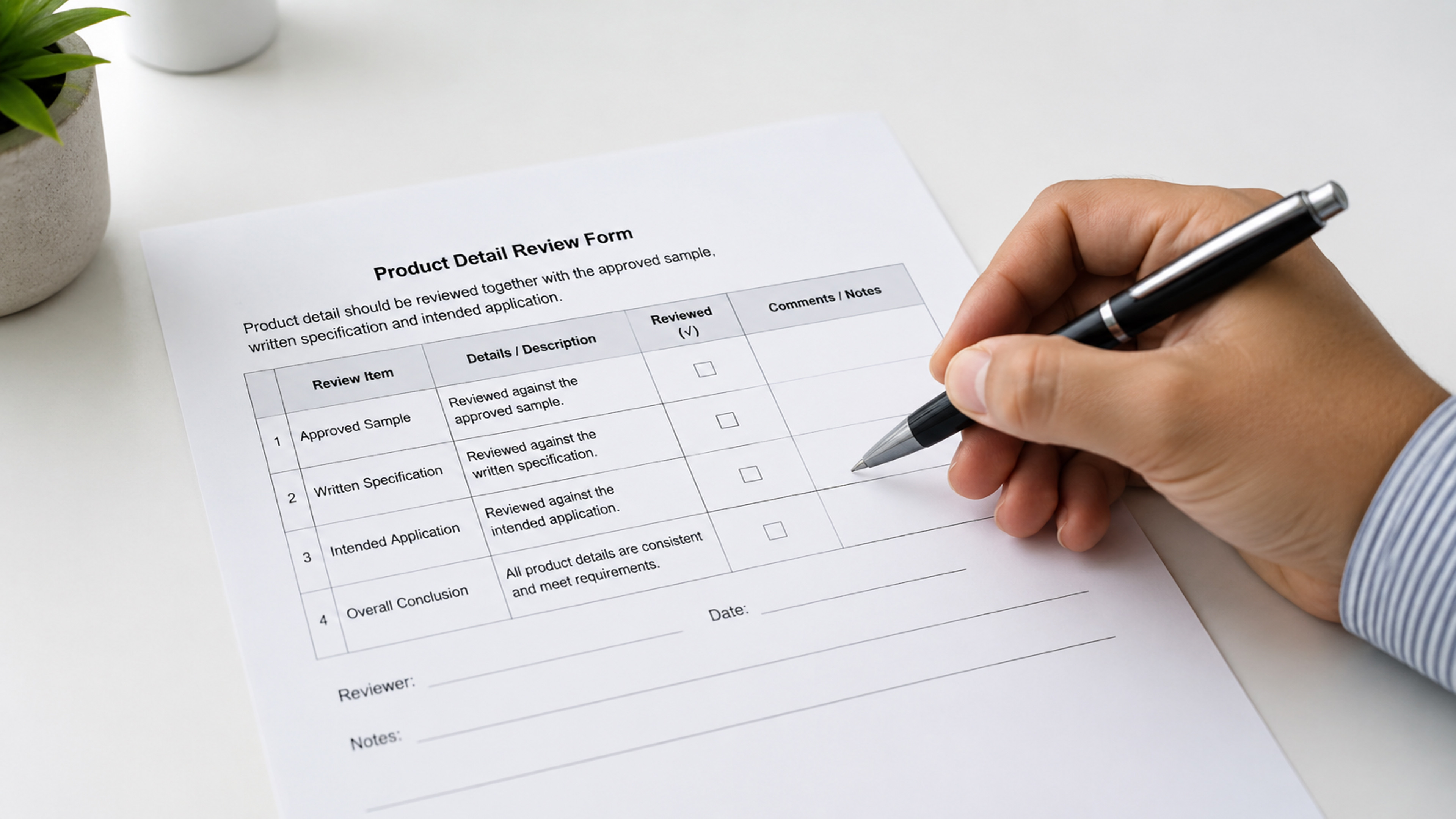
How to Compare Factory Capability and Quality Control
Product Development and Customization
If you need a standard SKU, the most important issues may be availability, price, packing and delivery. If you need a new shape, special color, custom finish or branded packaging, the evaluation should include the manufacturer’s development process.
Ask whether the factory can work from a CAD drawing, physical sample or design brief. Confirm what information is needed to begin, how sample approval works, whether mold development is required, and which costs and lead times apply.
G&J promotes OEM and ODM support for shapes, materials, plating and settings. You can also review the G&J customization service .
Materials, Shapes and Finishes
A professional manufacturer should help you define the product specification before quoting. For rhinestone components, this may include:
- Glass, acrylic, resin, pearl, CZ or metal material;
- Claw, prong, flatback, sew-on, hotfix or another construction;
- Round, oval, heart, drop, navette, square or special shape;
- Size, color, surface, backing, hole position and plating;
- Individual packing, bulk packing, private-label packaging or mixed SKU packing.
The correct selection depends on the product design and application. A jewelry component may require a different structure from a garment decoration piece. Request samples in the intended material and finish instead of approving a specification based only on a catalogue photograph.
Inventory, MOQ and Lead Time
A supplier evaluation should separate standard products from custom products. Standard items may be available from stock, while custom shapes, new molds, special finishes or private-label packaging may require a separate development and production schedule.
G&J’s website states that it maintains a 5,000-square-meter warehouse and more than 10,000 SKUs in stock, with regular products available for fast shipment in suitable circumstances. Stock, quantity and dispatch timing should be confirmed for the exact SKU before an order is placed.
Ask the supplier to clarify:
- The MOQ for standard products;
- The MOQ for custom molds or custom finishes;
- Sample cost and sample timing;
- Production lead time after approval;
- Packaging requirements and packing quantity;
- Whether partial shipment or mixed SKU orders are possible;
- What information is required for an accurate quotation.
Export and Communication Support
For international buyers, supplier reliability also depends on communication. A manufacturer should be able to provide clear product descriptions, quotation details, sample records, packing information and shipping coordination.
Make sure the commercial contact understands your destination market, product application, required documents and approval process. Clear communication at the beginning can reduce confusion during sampling and production.
How to Start a Supplier Evaluation
A practical supplier evaluation can be completed in five stages. Each stage helps reduce purchasing risks before a wholesale order is placed.
Questions to Ask Before an Inquiry
Before contacting a rhinestone factory, prepare the following questions:
Supplier Evaluation Checklist
- Do you manufacture this product in-house or source it from another supplier?
- Which materials, shapes, sizes, colors and finishes are currently available?
- Can you work from a CAD drawing, physical sample or design brief?
- What is the MOQ for a standard SKU and for a custom project?
- Can I receive samples before placing a bulk order?
- How are sample approval and production specifications recorded?
- What quality-control information is available for this product?
- Can you provide applicable SGS, REACH, RoHS, lead-free or nickel-free documentation for the specific SKU?
- What are the estimated sample, mold and production timelines?
- Can you support branded packaging, mixed SKU orders or repeat replenishment?
For product exploration, review G&J’s jewelry accessory component categories . For a project-specific discussion, use the G&J contact page and include your product brief, target quantity and required delivery market.
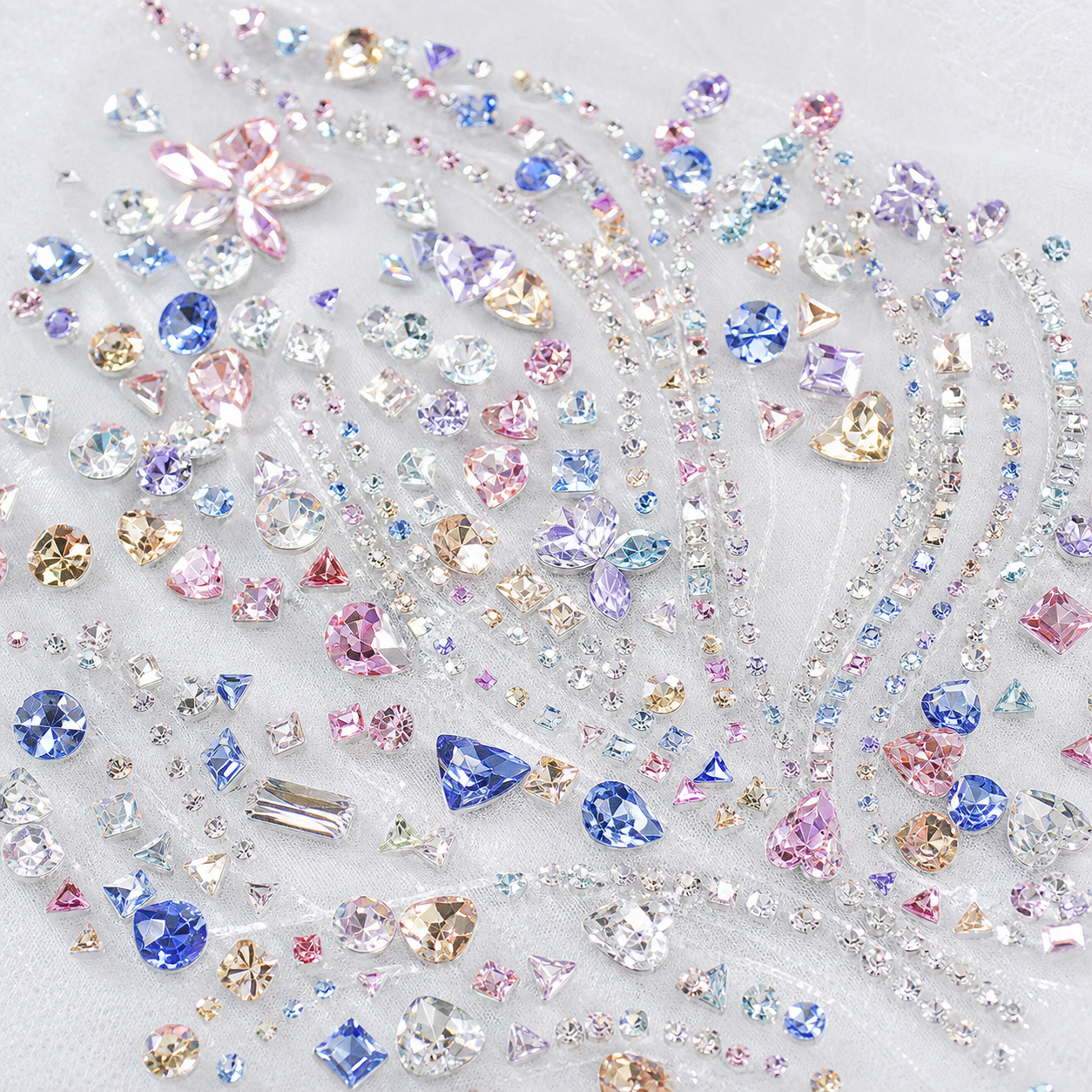
Planning a Long-Term Rhinestone Supply Partnership?
Choosing a reliable rhinestone manufacturer requires more than comparing catalogue prices. The best partner is the one that can connect product knowledge, factory capability, quality control, customization, communication and repeat-order planning.
G&J combines a broad rhinestone and jewelry accessory product range with manufacturing, wholesale and OEM/ODM capabilities.
REQUEST A SUPPLIER REVIEWFrequently Asked Questions
What should I look for in a reliable rhinestone manufacturer?
What is the difference between a rhinestone supplier and a rhinestone factory?
Can a rhinestone manufacturer provide product samples before bulk production?
Can G&J develop custom rhinestone shapes from CAD drawings or physical samples?
How should buyers confirm MOQ and lead time for rhinestones?
What quality and compliance documents should I request for rhinestone components?
Can rhinestone suppliers support private-label packaging and OEM/ODM projects?
Sources and Verification Notes
[1] G&J About Us – official company information, product scope, history and manufacturing background.
[2] G&J Official Website – homepage information on product categories, factory capability, warehouse, stock, applications and customer types.
[3] G&J Wholesale Rhinestones – official product category, application, customization and FAQ reference.
Verification note: Company-level figures and service descriptions should not be treated as a guarantee for every SKU. Before publication, confirm the current wording and supporting documents for MOQ, prices, stock, lead time, certifications, test reports, customer cases and product-specific performance claims.